
Obstructive Sleep Apnea
Why Your Airway Matters
Many people think sleep apnea is simply a sleeping problem. In reality, sleep-disordered breathing is often an airway problem.
When the upper airway becomes narrow or restricted, the body must work harder to breathe during sleep. This can lead to snoring, poor sleep quality, daytime fatigue, difficulty concentrating, elevated blood pressure, and obstructive sleep apnea.
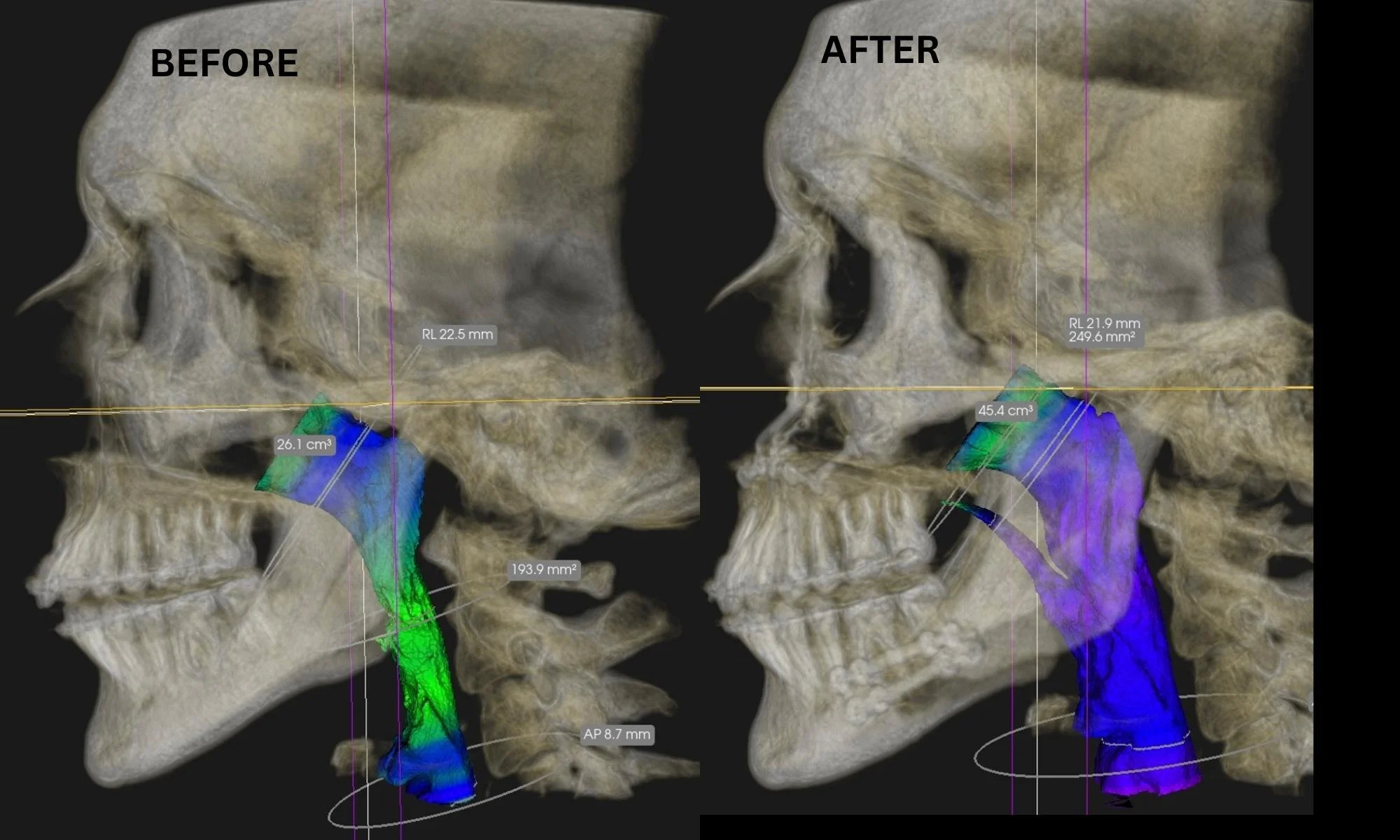
At Atlanta Sleep Apnea Institute, we use advanced 3D imaging to evaluate the size and shape of the airway, jaw position, and facial anatomy. By identifying the root cause of airway obstruction, we can develop a personalized treatment plan designed to improve breathing, sleep quality, and overall health.

Could an Airway Problem Be Affecting Your Health?
Many patients live with symptoms of airway obstruction for years before receiving a proper diagnosis.
You may benefit from an airway evaluation if you experience:
Loud or frequent snoring
Daytime fatigue or excessive sleepiness
Difficulty concentrating or brain fog
Frequent headaches upon waking
Teeth grinding or clenching
Chronic mouth breathing
Restless or poor-quality sleep
Difficulty tolerating CPAP therapy
A recessed chin or retruded jaw position
Upper Airway Resistance Syndrome (UARS)
Diagnosed obstructive sleep apnea
If several of these symptoms sound familiar, a comprehensive airway evaluation may help determine whether an underlying structural issue is contributing to your condition.
Beyond CPAP: Addressing the Cause of Sleep Apnea
CPAP therapy is often the first treatment recommended for sleep apnea. While highly effective when used consistently, many patients struggle with long-term compliance.
For individuals whose sleep apnea is caused by jaw position or airway anatomy, treatment may involve addressing the source of the obstruction rather than managing the symptoms alone.
Our team evaluates each patient individually and may recommend a combination of therapies, including:
CPAP therapy
Oral appliance therapy
Myofunctional therapy
Orthodontic treatment
Airway-focused jaw surgery
Lifestyle modifications
The goal is to identify the most effective solution based on your unique anatomy and health needs.
Modern Jaw Surgery for Sleep Apnea
Many people are surprised to learn how much jaw surgery has evolved.
Today's procedures are planned using advanced 3D technology and are designed to improve both airway function and recovery.
At Atlanta Sleep Apnea Institute, treatment may include:
Comprehensive 3D airway analysis
Virtual surgical planning
Precise digital treatment simulation
Advanced fixation techniques
Outpatient surgical care
Close postoperative monitoring and support
For qualified patients, jaw advancement surgery can significantly increase airway volume and improve breathing during sleep.
Your Treatment Journey
Step 1: Consultation
Meet with our team to discuss symptoms, medical history, prior sleep studies, and treatment goals.
Step 2: Airway Evaluation
We perform a detailed examination that may include 3D CBCT imaging, facial analysis, and airway assessment.
Step 3: Treatment Planning
Our team develops a personalized treatment plan based on your anatomy and sleep-disordered breathing diagnosis.
Step 4: Treatment
Treatment may include non-surgical therapies, orthodontic treatment, or airway-focused surgical procedures.
Step 5: Recovery & Follow-Up
Patients receive ongoing support throughout recovery, with follow-up appointments to monitor healing and treatment outcomes.
Step 6: Long-Term Results
The ultimate goal is improved breathing, better sleep quality, enhanced daytime energy, and long-term airway health.
Understanding Upper Airway Resistance Syndrome (UARS)
Not all sleep-disordered breathing appears as severe obstructive sleep apnea on a sleep study.
Many patients suffer from Upper Airway Resistance Syndrome (UARS), a condition in which the airway repeatedly narrows during sleep, causing frequent disruptions in sleep quality.
Common symptoms include:
Chronic fatigue
Brain fog
Difficulty focusing
Frequent awakenings
Anxiety
Morning headaches
Poor sleep despite spending adequate time in bed
Because UARS is often underdiagnosed, a comprehensive airway evaluation can be an important step toward identifying the underlying cause of persistent symptoms.